Programme A · Main focus
Arabic and Islamic Cultural Heritage
Manuscripts and buildings, arts and crafts, music and oral tradition, and the history of science: this programme uses AI to help people find, understand and pass on this heritage, while every object stays with those who keep it.
In progress Manuscripts and the written word: work has begun, and the first method report is in preparation.
Planned Built heritage, arts and crafts, music and oral tradition, and the history of science: each field will begin together with holding institutions and specialists in that field.
Aim
Arabic and Islamic cultural heritage is kept in libraries, archives, museums and historic cities, and in living traditions, across many countries. Much of it is described in catalogues and inventories that seldom refer to one another, and much is known only to specialists or to the communities that carry it.
This programme is the main focus of the Initiative. It uses AI where AI can genuinely help: to find related objects across distant collections, to connect descriptions written in different languages and scripts, and to make heritage understandable to a wider public. The institutions and communities that keep this heritage remain in charge of it, are named, and are where readers are sent.
Four fields
Manuscripts and the written word
Manuscripts, documents and inscriptions in Arabic script, found through their catalogue records and always linked back to the holding institution.
Built heritage, arts and crafts
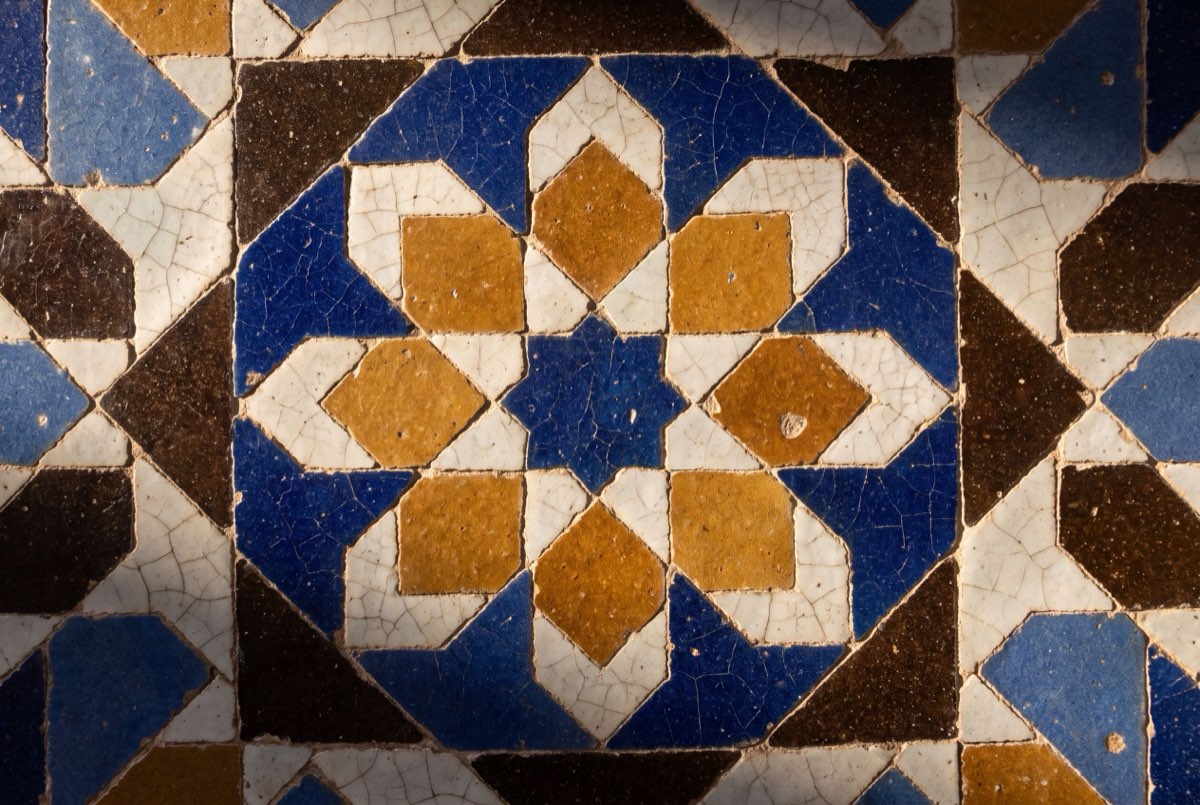
Architecture and historic cities, calligraphy as an art, ceramics, textiles and other crafts, documented together with the museums, archives and specialists who study them.
Music and oral tradition
Music, poetry and storytelling and the knowledge around them, taken up only with the consent of those who hold and carry these traditions.
History of science
Astronomy, mathematics, medicine and the other sciences as they were practised and written down in the Arabic and Islamic world, made accessible through their sources.
Where the work begins: manuscripts
The first field in which the Initiative can offer something verifiable is the written heritage. Arabic-script manuscripts are kept in many countries and described in catalogues that seldom refer to one another, so copies of the same work often remain unconnected.
The work brings those descriptions together in a single search, without removing the manuscripts from the care of the institutions that hold them. It draws on records from published catalogues and IIIF sources, among them Fihrist, Qalamos and HMML. Each result is a manuscript record that names the holding institution and leads to its catalogue entry or to its image server. The other fields will follow the same principles.
For whom
- Researchers tracing works, objects and traditions across distant collections.
- Libraries, archives, museums and manuscript centres that want their holdings to be found without handing over their digitised images.
- Heritage bodies and specialists who document built heritage, crafts, music and oral traditions.
- Readers who want to understand this heritage and to see where each piece of information comes from.
Linking back, not mirroring
Digitised manuscripts and other images of heritage objects remain on the servers of the institutions that hold them. Where an image is shown, it is loaded directly from the holding institution through the International Image Interoperability Framework (IIIF), together with the institution's name and the citation details of the object, and only with the institution's permission or for holdings in the public domain. The Initiative keeps no copies.
This is a principle, not only a technical choice. The holding institution keeps the decision over its collection, it is named as the holding institution, and readers are sent to it.
No silent merging
The same work or author often appears under different names and spellings in different catalogues. When one record or name is linked to another, the link states the method used and the level of confidence. Nothing is merged without saying so, and a reader who considers a link wrong can see on what basis it was made.
Catalogue data, not handwriting recognition
Automatic reading of historical Arabic handwriting is not yet a solved problem; the OpenITI AOCP project is working on it. Work on manuscripts therefore confines itself to catalogue data and existing transcriptions, and it makes no promise to read manuscripts automatically. Test sets for handwriting recognition would come only at a later stage, and only together with holding institutions.
First verifiable output
A method report on the combined manuscript search and on name matching. It will state the measurement run, its date, the sample and the known limits, and explain how each figure was produced. No figure is published before this report.
Publication date: expected in December 2026.
How progress is measured
- The share of records with a valid link back to the holding institution's catalogue, or to its images through IIIF.
- Precision and recall of name matching, calculated each quarter and reported with the measurement run.
Values will appear here only after the method report has been published.
What this programme does not do
- We do not mirror digitised manuscripts or other images of heritage objects, or keep copies of them.
- We do not record or publish living traditions without the consent of those who carry them.
- We do not present AI-generated images or reconstructions as historical objects; illustrations made with AI are marked as such.
- We do not merge records or names silently.
- We make no promise of automatic reading of historical handwriting.
- We do not link private or family collections without written consent, which the owners may withdraw.
- We do not act on our own in conflict regions; holdings there are approached only through established heritage bodies and local archives.
- We claim no ownership of any collection and no exclusive rights to it.